

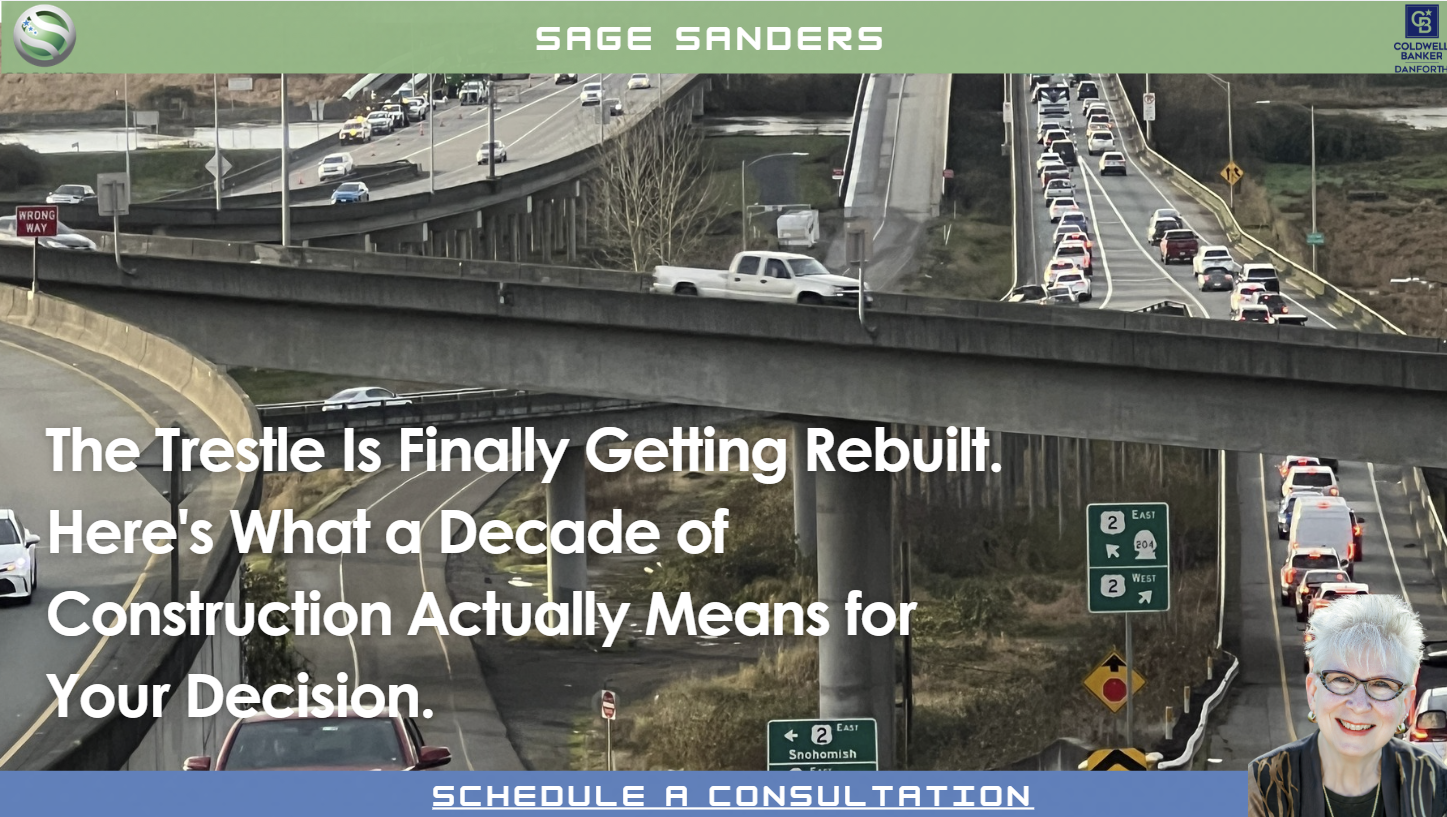
Most people crossing the US 2 trestle every morning already suspect what WSDOT's own numbers just confirmed. Left alone, this commute doesn't stay bad. It gets dramatically worse.
Here's the direct answer, if you're the kind of person who wants it up front before the story: WSDOT isn't widening the existing westbound trestle. They're demolishing it and rebuilding a modern six-lane structure in its place. Tolling is planned both during construction and for decades after it opens. And the earliest realistic completion is likely into the mid-2030s, not this decade.
I've watched this corridor for twenty-five years, and I've come to think of a bridge as something more than concrete and rebar. A bridge is the physical version of what my clients do every day: cross from what was into what's next, on a timeline they don't fully control, trusting the ground on the other side before they can see it clearly. The Snohomish River trestle just happens to be the literal version of that, connecting Lake Stevens, Snohomish and Monroe to Everett and the world past I-5.
So let's talk about what's actually planned, honestly.
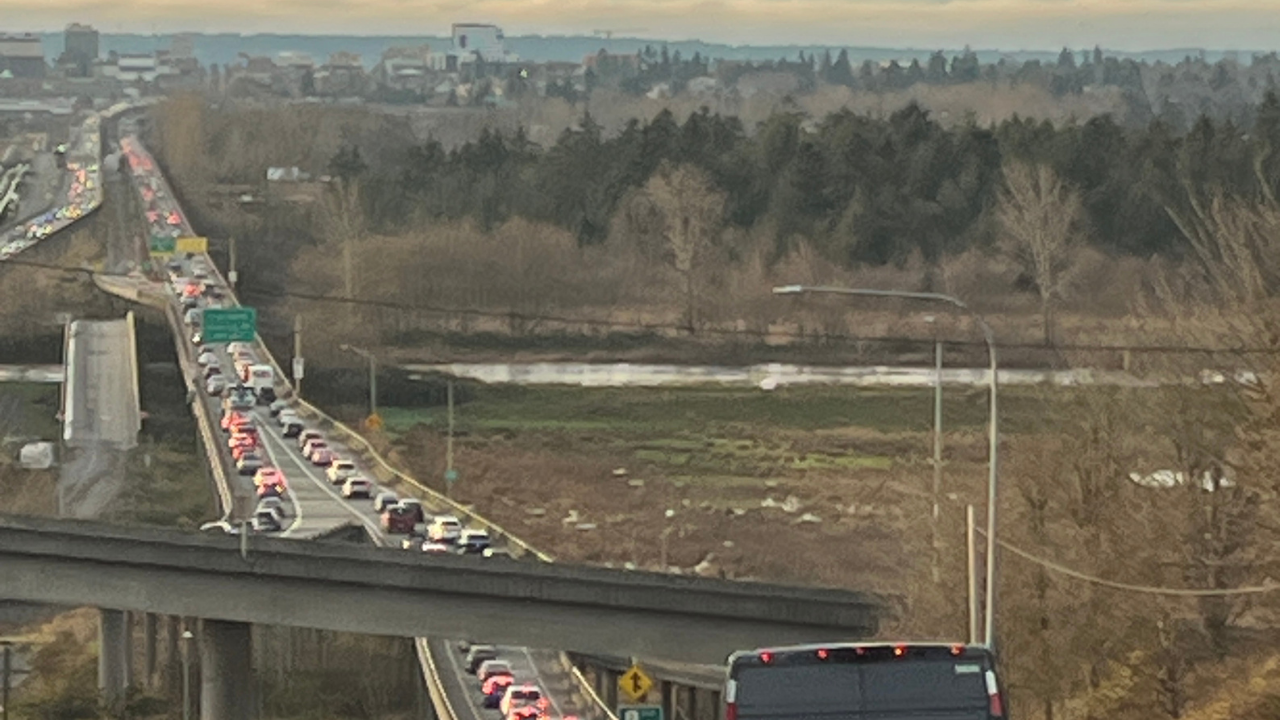
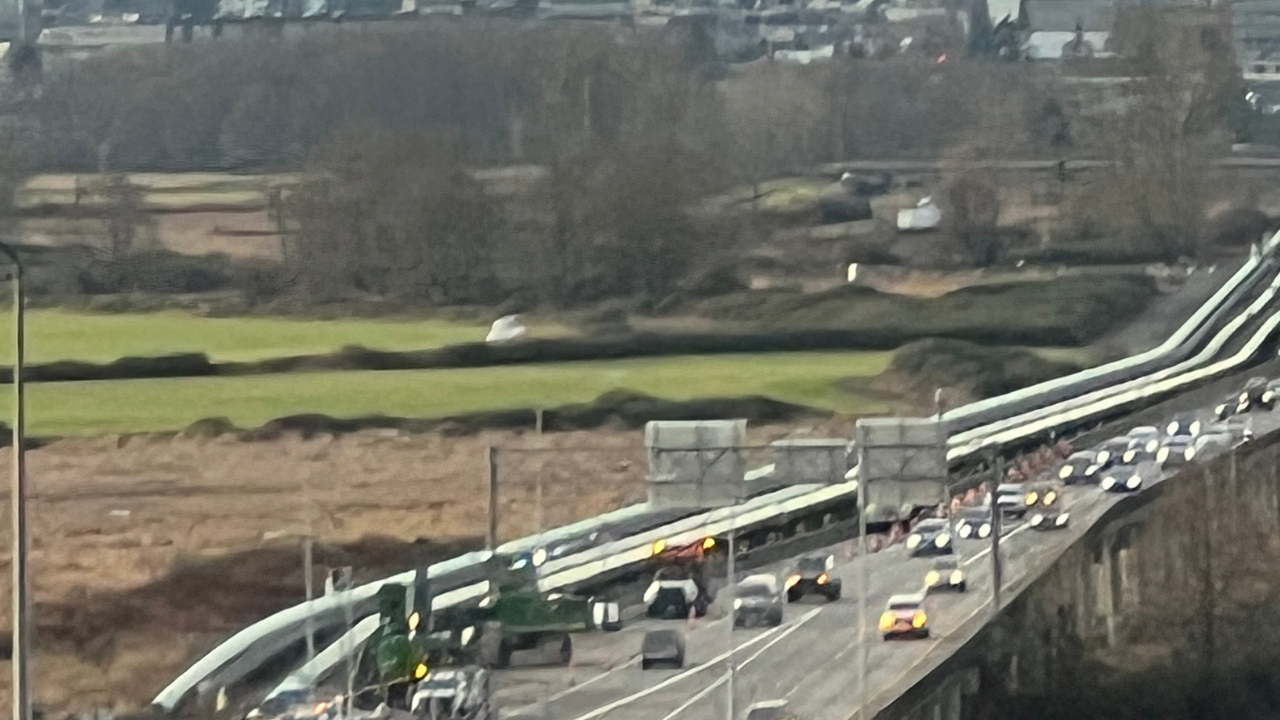
The westbound structure, the older and more fragile of the two spans, is being fully replaced, not patched. What replaces it is six total lanes, three in each direction: two general-purpose lanes and one dedicated HOV and transit lane, full-width shoulders on both sides so a fender bender doesn't turn into a three-hour standstill, and a separated multi-use path along the north side for the people who'd rather bike or walk across Ebey Island than sit in it.
Here's the finding most people miss, and it's worth naming precisely because it changes what "fixing the trestle" even means. WSDOT's own analysis found that simply widening the bridge won't solve the backup. The real bottleneck is the limited capacity of the southbound I-5 on-ramp in Everett. Cars can cross the river fine. They just can't get onto the freeway fast enough once they arrive. That's why any credible plan has to include new, direct-connect ramps into downtown Everett, not just more lanes over the water.
And here's what happens if none of it gets built. Under WSDOT's "No-Build" projections, a Lake Stevens to I-5 morning commute that takes about 14 minutes today stretches to roughly 32 minutes by 2040, with average speeds dropping to around 8 miles per hour. From Snohomish, a 9-minute run to I-5 nearly triples to 28. Without a real expansion of regional bus service, HOV and transit are expected to carry less than 9 percent of morning traffic even in 2040. Those aren't scare numbers. They're the state's own modeling of doing nothing.
Now, the part people ask me about most, and the part I want to say plainly because it rarely gets said plainly. Tolling isn't just a construction-era inconvenience that disappears once the ribbon gets cut. WSDOT's financial modeling has tolling starting before or during construction, to generate revenue against the roughly two to three billion dollar cost and avoid piling up interest on borrowed funds, and then continuing for decades afterward to pay off those construction bonds and fund the bridge's ongoing operations and maintenance. Community feedback has been loud about the cost to everyday commuters in Lake Stevens, Snohomish and Monroe, and that pushback is part of why the legislature is now looking seriously at low-income toll discounts. Tolling would also cut trestle traffic by as much as 30 percent, which tells you plainly that it works. It just doesn't end when the construction cones come down.
That's not a reason to wait. It's a reason to know how you actually make decisions under a timeline this long and this uncertain. An Analytical mind wants to see WSDOT's own traffic and tolling numbers laid out before it trusts any instinct about this decision. A Cautious mind wants to see construction actually start before committing. A Strategic mind sees a decade of undervalued potential before the rest of the market catches up. A Balanced mind wants the whole family to weigh in on a longer commute before signing anything. A Timing mind isn't watching WSDOT's calendar at all. It's waiting for its own season to feel right, and no groundbreaking date is going to rush that along. None of those is the wrong answer.
If you're weighing a decade-long timeline like this one, it helps to know which of those you are. I built a two-minute ABCST Decision-Making Assessment for exactly that question, and I personally read every response and follow up with real thoughts, not a form letter. This is meant as a gift to both of us.
Download it here.
Take the ABCST Assessment
A decade is a long time to wait for a bridge to feel finished. It is not a long time to wait to know which side of the river actually fits the life you're building. That part, unlike the trestle, doesn't take WSDOT eight years to figure out.
Sage Sanders, Managing Broker
Coldwell Banker Danforth | Sage LifeWorks 98258
[email protected]
Text: 425-333-1315 | Call: 206-478-7333
sagesanders.com
Check out this article next