

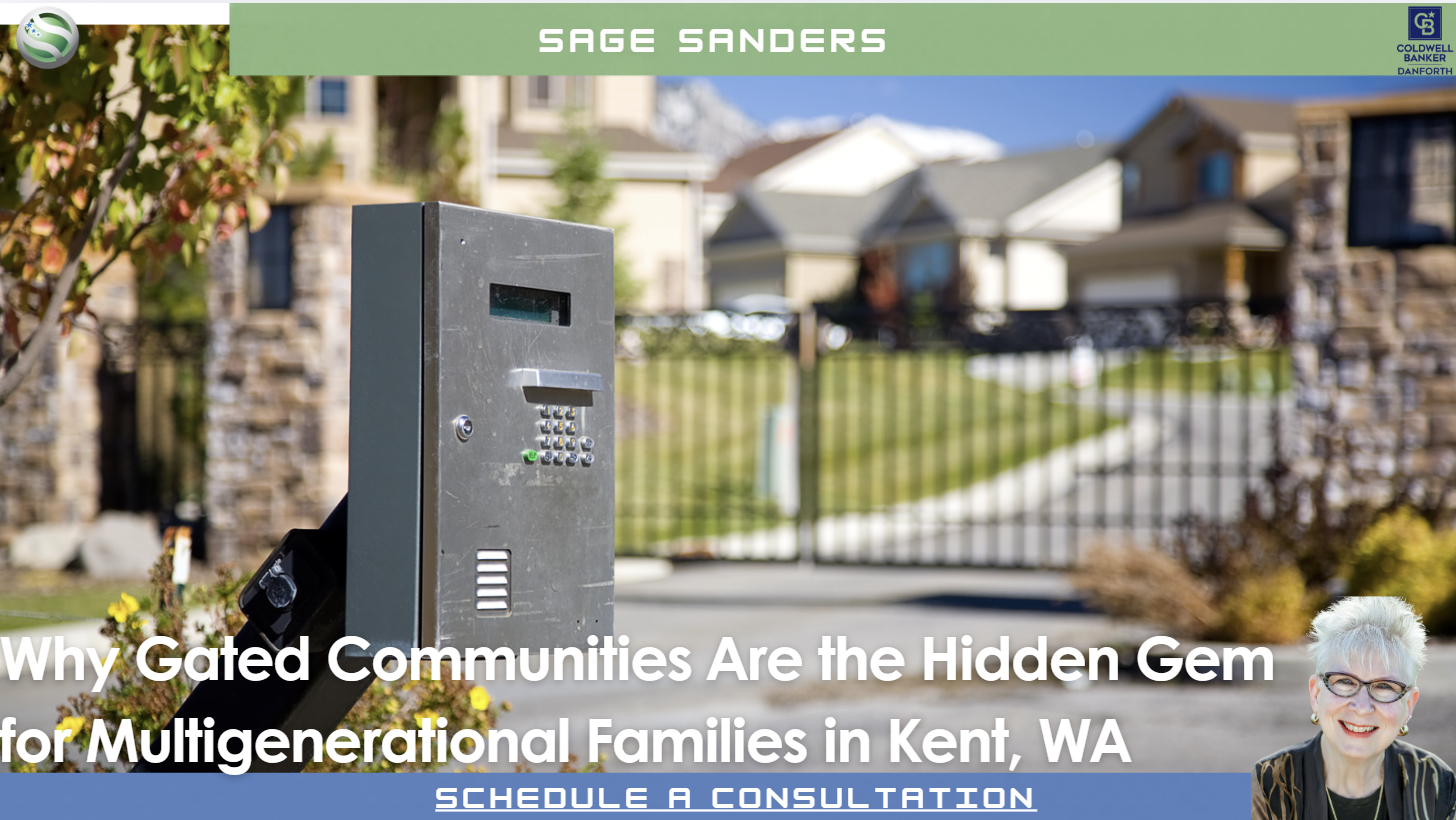
The most overlooked housing solution for multigenerational families in King County isn't a new build, an ADU, or a creative financing arrangement. It's a gated community in Kent. That might surprise you. Gated communities carry a specific mental image: manicured landscaping and a lifestyle designed for people who want the world kept at arm's length. For some communities, that's fair. But for multigenerational families, that framing misses something important.
What Multigenerational Families Actually Need

What most multigenerational families actually need is a place where grandma can walk to the mailbox without a second thought. Where the grandkids can ride bikes and the adults don't spend every minute watching from a window with their stomach tight. Where the generation in the middle, the ones managing careers, parenting, and aging parents all at once, can exhale. That's not elitism. That's engineering for a different kind of life.
Why Kent Specifically
Kent sits in a genuinely valuable position for this kind of arrangement. It's in King County, which matters for commutes, school access, and services. But it's not Bellevue. The price per square foot reflects that, and for a family trying to bring two or three generations into a shared neighborhood, square footage matters enormously. I've also had families from Snohomish County look to Kent specifically because it's the kind of midpoint that keeps everyone within a reasonable drive without asking anyone to give up too much. The gated communities in and around Kent tend to offer something open subdivisions don't: a built-in sense of order. Not control for its own sake, but the kind of predictability that helps a family with different needs and different rhythms share space without constant negotiation. HOA-managed maintenance means nobody's arguing over the fence between units. Shared amenities create gathering points that aren't just someone's living room, which matters more than people realize when three generations are trying to find neutral ground together.
What This Looks Like in Practice
I've worked with families where the parents are ready to downsize but want to stay near their adult children without feeling like they're in the way. I've worked with move-up buyers building a four-bedroom home and quietly planning for a parent to join them within a few years. I've worked with families where multigenerational living isn't a trend at all. It's simply how life has always been organized, and they just need a neighborhood that supports it rather than fights it. Put three generations under one roof without a plan and you don't get a family compound. You get a hostage situation with better snacks.
How Each Family Member Approaches the Decision

What I've noticed is how differently each family member approaches the decision. The Analytical adult child arrives with a spreadsheet already open: HOA fees, school ratings, commute times, laid out and compared. The Cautious parent processes the change more slowly, needing to know this isn't a loss of independence but an extension of it. The Strategic ones are already thinking about what the arrangement looks like in ten years and how it fits their portfolio. The Timing personality won't decide at all until the moment feels right inside, no matter how much data you hand them. And the Balanced family member is quietly weighing all of it together, the numbers and the feelings, waiting for the whole family to agree before they'll say yes. I pay attention to all of it. Because a real estate decision this layered isn't really about square footage. It's about whether every person in the family can see themselves living well inside the choice for many years. Kent's gated communities won't work for every family. Some people genuinely prefer the openness of a traditional neighborhood, a street where everyone knows everyone without a keypad at the gate. That's a real and valid preference. But if your family is navigating how to live closer together, and you want a neighborhood designed for that, rather than one you're retrofitting to fit, Kent is worth a closer look than most people give it.
Families rarely agree on how to make a decision this size, and that's normal, not a red flag. My ABCST Decision-Making Assessment takes about two minutes and gives each one of you language for how you personally move through a big choice like this one. I read every response myself and we discuss your preferences together to be in alignment throughout the process.
Still early in figuring out what buying even looks like from here? Start with the Buyer's Guide. It's the groundwork most people wish they'd had before the search got loud.
Check out this article next